
The short answer is yes.
You need cultural resource management when your project needs a federal or state permit, uses public funding, crosses public or Tribal land, or falls under a state or local historic preservation requirement. Cultural resource management, or CRM, identifies historic and archaeological resources on a project site and resolves them through a documented regulatory process. Most projects are not stopped by that process. They are scheduled through it.
What is cultural resource management?
Cultural resource management is the historic and cultural counterpart to environmental due diligence. Environmental due diligence protects endangered plants, animals, and ecosystems. Cultural resource management protects evidence of the human past, including archaeological sites, historic buildings and structures, cultural landscapes, places of ongoing significance to Tribal nations and other communities, and in many jurisdictions paleontological resources.
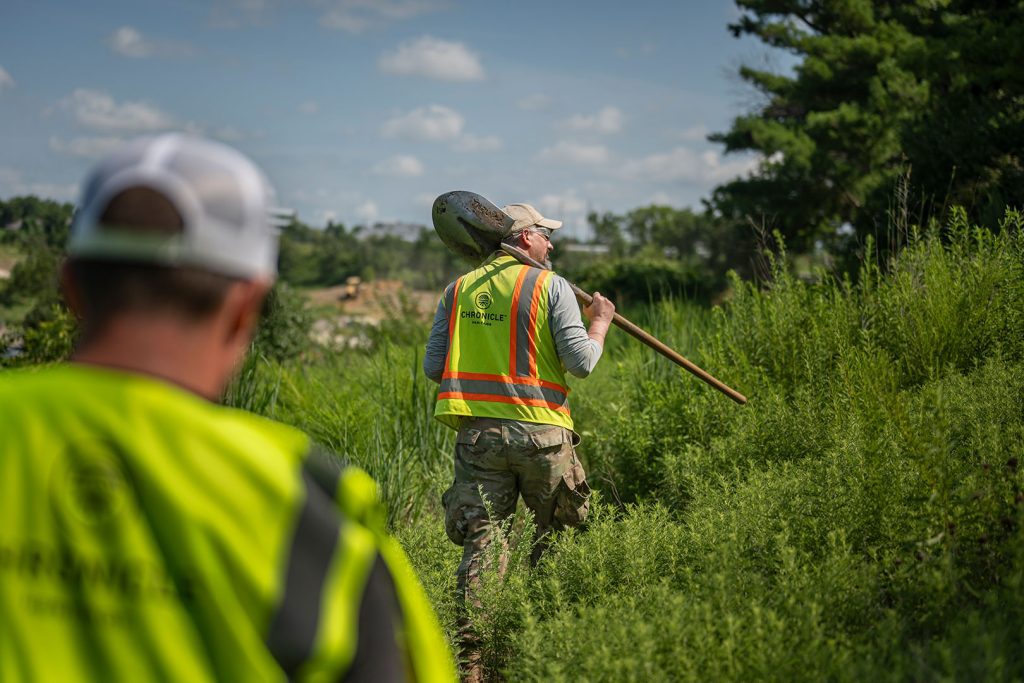
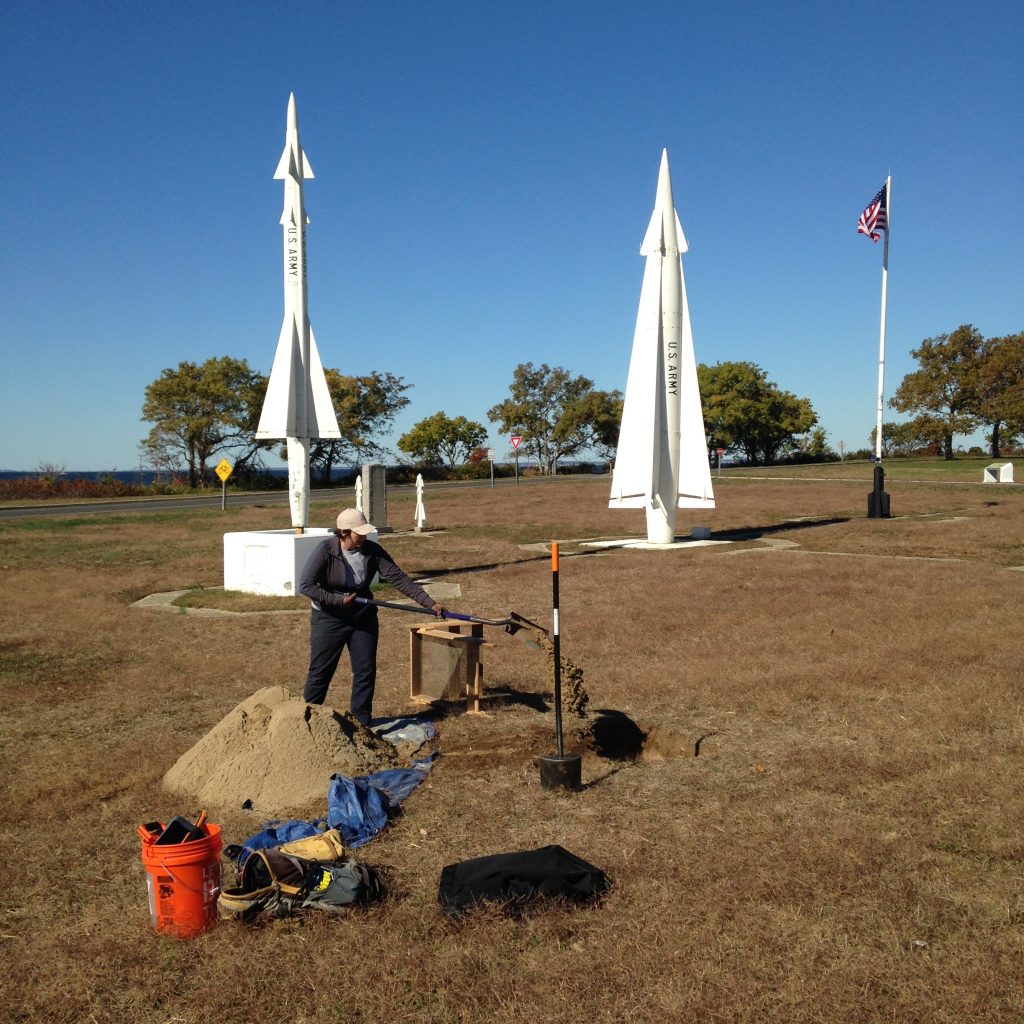
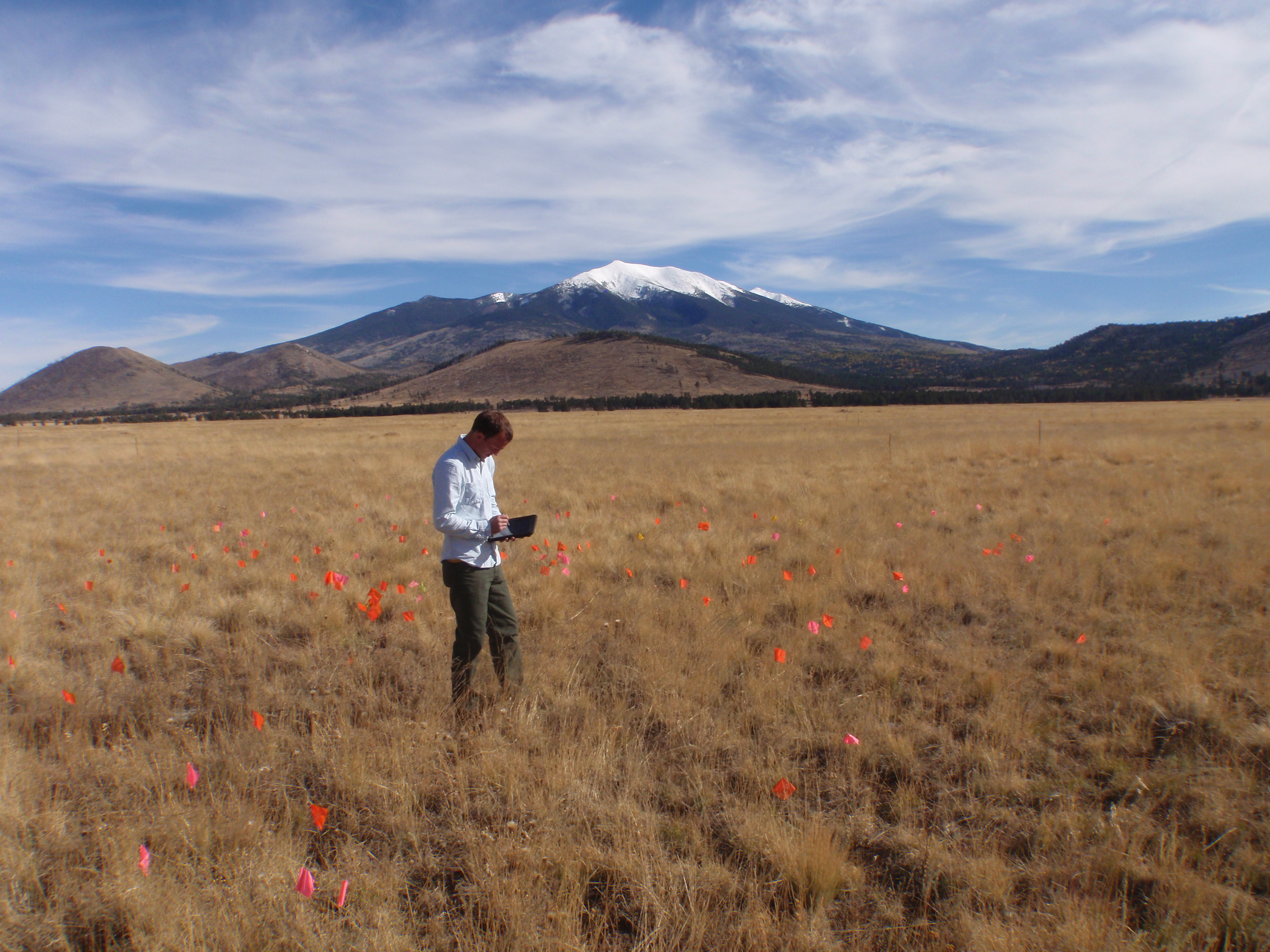
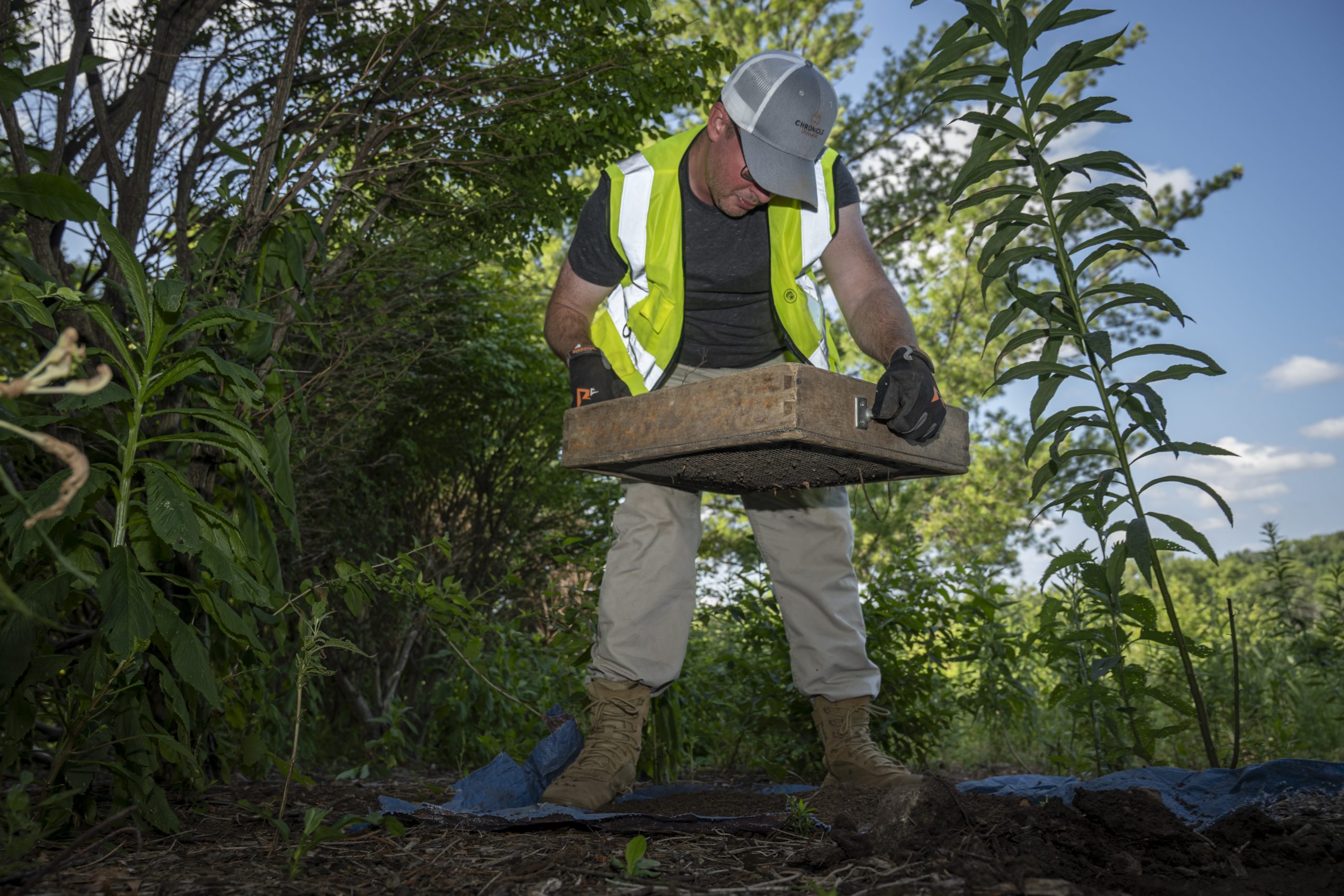
In practice, a CRM firm does four things:
- It determines which laws apply to a specific project.
- It identifies what cultural resources are present.
- It assesses how the project would affect them.
- It negotiates and documents how those effects will be handled.
When is a cultural resource survey legally required?
A cultural resource review is required when a project has a legal trigger. Federal, state, Tribal, and local laws each create their own triggers, and more than one can apply to the same project at the same time.
The most common federal trigger is Section 106 of the National Historic Preservation Act, codified at 54 U.S.C. § 306108 and implemented by the Advisory Council on Historic Preservation through 36 CFR Part 800. Section 106 requires a federal agency to take into account the effects of any undertaking it carries out, funds, assists, permits, licenses, or approves on properties listed in or eligible for the National Register of Historic Places. The legal duty sits with the federal agency. As the applicant, you carry the schedule and the cost.
Section 106 does not require preservation, and it does not give any party a veto. It requires that effects be identified, considered, and resolved through a documented process, and that the Advisory Council on Historic Preservation (ACHP) be given a reasonable opportunity to comment before the agency approves the expenditure of funds or issues a license for the undertaking. The regulation at 36 CFR § 800.1(a) describes the purpose as accommodating historic preservation concerns alongside the needs of federal undertakings, seeking to avoid, minimize, or mitigate adverse effects. Decision authority stays with the federal agency official. That distinction is the reason most projects finish. Some projects have no cultural resource requirement at all. A privately funded project on private land with no federal permit, no federal or state funding, no state approval, and no applicable local ordinance often triggers nothing. State laws protecting unmarked human burials are the significant exception, because those generally apply regardless of whom owns the land.
Which laws apply to my project?
| Law | Citation | What triggers it | Where it applies | Who reviews | What it requires |
| Section 106, National Historic Preservation Act | 54 U.S.C. § 306108; 36 CFR Part 800 | A federal undertaking, including a federal permit, license, approval, or funding | Nationwide, any land ownership, once a federal nexus exists | Federal agency, with SHPO or THPO, Tribes, and the ACHP | Identify historic properties, assess adverse effects, resolve them through a documented process |
| Archaeological Resources Protection Act | 16 U.S.C. §§ 470aa–470mm | Excavation, removal, or damage to archaeological resources | Public lands and Indian lands for the permit and damage provisions; the trafficking provision at § 470ee(c) reaches resources taken from any land in violation of state or local law | Federal land manager | Permit before archaeological investigation; civil and criminal penalties for looting or unauthorized removal |
| Native American Graves Protection and Repatriation Act | 25 U.S.C. §§ 3001–3013; 43 CFR Part 10 | Discovery or intentional excavation of Native American human remains or cultural items; separately, collections held by federally funded institutions | Excavation and discovery provisions at § 3002 apply to federal and Tribal lands only; inventory and repatriation duties at §§ 3003–3005 apply to museums, defined at § 3001(8) as institutions or state and local agencies that receive federal funds and hold Native American cultural items | Federal agency or Tribal official, with lineal descendants, Tribes, and Native Hawaiian organizations | Stop work on discovery, notify, consult, and repatriate |
| State historic preservation statutes | Varies by state | State permits, state funding, or state agency action | Statewide, per each state’s terms | State Historic Preservation Office and state agencies | Review comparable to Section 106, sometimes broader |
| State unmarked burial statutes | Varies by state | Discovery of human remains or a burial site | Usually all land, including private property | State archaeologist, medical examiner, and designated Tribal representatives | Stop work, notify, and follow a statutory treatment process |
| Local ordinances | Varies by jurisdiction | Zoning, demolition, or subdivision approval | Within the jurisdiction | Local landmarks or preservation commission | Review before demolition or alteration |
Federal and state requirements often run in parallel. A project with a Clean Water Act Section 404 permit from the U.S. Army Corps of Engineers triggers Section 106, and a separate state permit for the same project can trigger a separate state statute with its own standards and its own timeline. State law is sometimes broader than federal law.
Does NAGPRA apply to private land?
No. The Native American Graves Protection and Repatriation Act applies to federal lands and Tribal lands, and to institutions that hold collections and receive federal funding. Its discovery and excavation provisions do not reach private land, and in most states they do not reach state or local government land either. The Florida Division of Historical Resources states this directly for Florida projects.
On private land, state unmarked burial laws are the control, instead. Louisiana’s Unmarked Human Burial Sites Preservation Act at La. R.S. 8:671–681 and New York’s Unmarked Burial Site Protection Act, enacted in 2023 and codified at N.Y. Executive Law § 171, are two examples among many. Those statutes generally require that work stop, that specific officials be notified, and that a treatment plan be developed before work resumes. Some are more protective than federal law. If you own the land, you are still not free to proceed.
Does ARPA apply to my project?
The Archaeological Resources Protection Act applies to public lands and Indian lands. It requires a federal permit before archaeological investigation on those lands under 16 U.S.C. § 470cc, and it carries civil and criminal penalties for unauthorized excavation, removal, or damage, including imprisonment, fines, and forfeiture of vehicles and equipment.
ARPA’s permit and damage provisions do not reach private land. One provision does. Under 16 U.S.C. § 470ee(c), it is a federal offense to sell, purchase, exchange, transport, or receive in interstate or foreign commerce any archaeological resource taken in violation of any state or local law, which can reach artifacts removed from private or state land.
For a project on private land with a federal permit, ARPA is usually not the operative statute – Section 106 is.
What does cultural resource management look like by sector?
The trigger analysis changes substantially depending on what you are building.
| Sector | Common federal trigger | Common non-federal trigger | What usually drives the schedule |
| Utility-scale solar and wind | BLM right-of-way, USACE Section 404 permit | State siting board or public utility commission approval | Survey acreage against an interconnection deadline |
| Electric transmission | DOE or FERC authorization, BLM right-of-way, USACE Section 404 | State certificate of public convenience and necessity | Linear corridors crossing many jurisdictions and Tribal interests |
| Oil, gas, and midstream | BLM permit, USACE Section 404, PHMSA authorization | State pipeline and surface use permits | Long linear surveys with seasonal access windows |
| Transportation | FHWA or FTA funding, USACE permits | State DOT programmatic agreements | Right-of-way acquisition and letting dates |
| Water and wastewater | USACE Section 404, EPA state revolving fund assistance | State funding conditions | Funding cycle deadlines |
| Residential and commercial land development | Often none | State burial statutes, local ordinances, state environmental review | Entitlement and hearing calendars |
| Mining | BLM or USFS plan of operations, NEPA review | State reclamation permits | Multi-year baseline studies |
| Telecom and data centers | FCC review process, USACE permits | Local zoning approval | Compressed construction schedules |
| Ports and marine | USACE Section 10 and Section 404, BOEM authorization | State submerged lands authority | Dredge and vessel windows |
If your sector is not listed, the same question applies. Ask what permit, approval, or funding your project needs, and from whom.
What are Phase I, Phase II, and Phase III archaeological surveys?
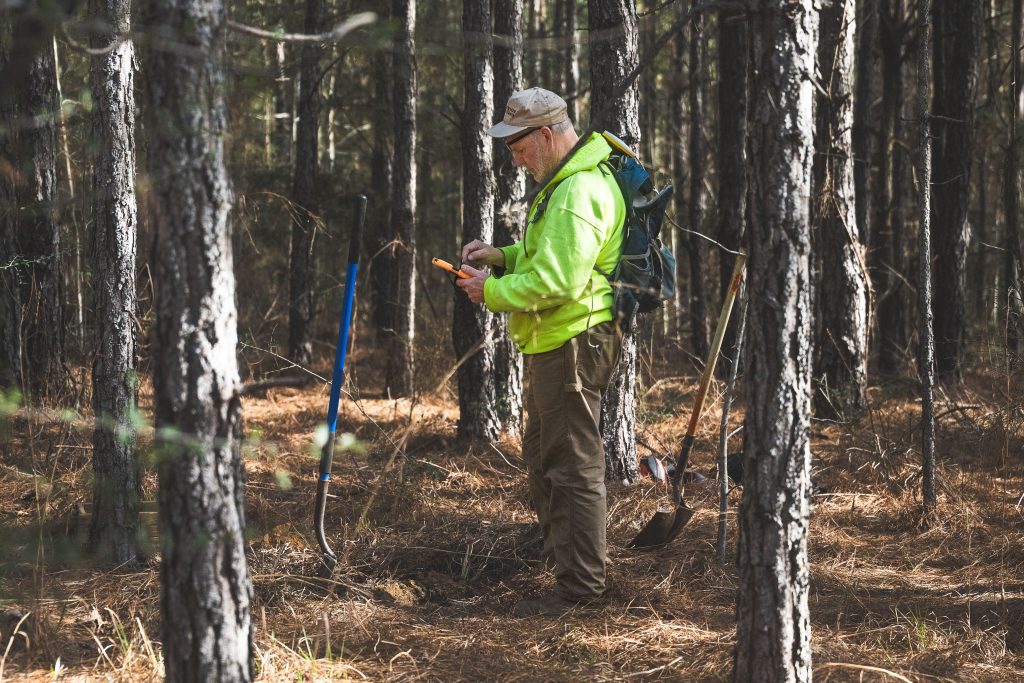
Phase I, II, and III is state-level vocabulary rather than federal vocabulary. State Historic Preservation Offices in West Virginia, Pennsylvania, Virginia, and many other states publish guidance using those terms. Federal Section 106 review does not.
The three phases describe a sequence of work:
- Phase I, identification. Determine whether archaeological resources are present, usually through background research and systematic field survey.
- Phase II, evaluation. Determine whether an identified resource is eligible for the National Register of Historic Places.
- Phase III, data recovery. Recover information from an eligible resource that the project will adversely affect and that cannot be avoided.
Federal Section 106 review follows a parallel but differently named sequence under 36 CFR Part 800: initiate the process, identify historic properties under § 800.4, assess adverse effects under § 800.5, and resolve adverse effects under § 800.6. Phase I corresponds roughly to identification, Phase II to eligibility determination, and Phase III to one method of resolving an adverse effect. The regulation does allow a phased approach to identification and evaluation at § 800.4(b)(2), which is where the state phase vocabulary connects to the federal process, but it never uses the Phase I, II, and III labels.
Phase III is the exception rather than the rule. It is triggered only when an eligible resource will be adversely affected and avoidance is not possible.
What happens if we find something during construction?
On federal or Tribal land, a discovery of Native American human remains or cultural items starts a clock set by 43 CFR § 10.5. The person responsible for the activity must immediately stop any activity that could threaten the discovery, secure the area, and report the discovery immediately in person or by telephone. Written documentation is due no later than 24 hours after the discovery. The appropriate official must respond no later than three days after receiving that documentation, and must issue a written certification and approved plan of action no later than 30 days after receiving it. Lawful activity may resume on a date no later than 30 days after the date of the written certification.
On private or state land, the timeline comes from state statute and varies. Some states move faster than the federal process. Some move considerably slower.
For historic properties, generally, a discovery after review has concluded is handled under 36 CFR § 800.13, which covers post-review discoveries. If an unanticipated discoveries plan is already in place, the plan governs and work proceeds under it. If no plan exists, the process starts from the beginning while equipment sits idle.
That contrast is the whole argument for doing the work early. A discovery with a plan is a scheduled interruption. The same discovery without a plan is an open-ended one.
How does CRM manage schedule and cost risk?
A CRM firm cannot remove the resources that are in the ground. It converts an unknown risk into a known, scoped, and budgeted one.
The regulatory exposure is the first piece. An undetected archaeological site can throw a federal agency’s Section 106 compliance into question, and a challenge to that compliance is a challenge to the permit your project depends on. Complete documentation from the start gives the agency a defensible record, which protects your authorization.
Schedule exposure is the larger risk for most projects. Every day of stopped work carries financing cost, standing labor and equipment cost, and deferred revenue. Survey work done during design costs a scheduled amount at a scheduled time. The same work forced by a mid-construction discovery costs whatever it costs, whenever it happens.
There is also a design dimension. Findings that arrive while the layout is still flexible can often be avoided by moving a pad, shifting an alignment, or resequencing a phase. Findings that arrive after the design is fixed and permits are issued usually cannot.
Does cultural resource management stop development?
Rarely. The usual outcome of Section 106 review is a documented resolution, not a cancellation. Resolution methods include redesign to avoid a resource, data recovery excavation, archaeological monitoring during construction, and documentation before demolition.
Three things keep a project moving. Survey early enough that findings can still influence design. Put an agreement in place before construction, either a Memorandum of Agreement under 36 CFR § 800.6(c) or a Programmatic Agreement under § 800.14(b), that states in advance what happens if something is found. Engage early with Tribes and communities, because disputes that surface late tend to arrive as litigation or public opposition rather than as a technical comment.
One point on Tribal consultation. Government-to-government consultation with federally recognized Tribes is the federal agency’s legal responsibility and cannot be delegated to an applicant or a consultant. Under 36 CFR § 800.2(c)(4) an applicant for federal assistance or a federal permit is entitled to participate as a consulting party and may be authorized by the agency to initiate consultation, but the agency official remains legally responsible for all findings and determinations. A CRM firm supports that process throughout. It does not replace it. Getting the relationship right early matters more than almost anything else in the schedule.
What is changing in Section 106 in 2026?
On July 24, 2026, the Advisory Council on Historic Preservation voted to move forward with a notice of proposed rulemaking that would amend 36 CFR Part 800 for the first time since the amendments published at 69 FR 40544 and effective August 5, 2004.
According to Holland & Knight’s analysis of the draft, the proposal would consolidate the current consultation framework into a single Section 106 report prepared and certified by the federal agency, narrow the area of potential effects to direct material alterations, replace the avoid-minimize-mitigate framework with language allowing agencies to address adverse effects where other considerations outweigh preservation, make public participation discretionary, and allow agencies to adjust regulatory deadlines without consensus from other consulting parties. The draft goes to the Office of Information and Regulatory Affairs for interagency review before it publishes in the Federal Register. Counsel tracking the rulemaking report a 30-day comment period, though the official period will be set by the published notice.
Nothing has changed yet. The current regulations remain in effect and Section 106 review proceeds under them. Applicants should expect faster reviews if the rule is finalized as proposed, along with higher litigation risk for the first projects that rely on it.
Frequently asked questions
Do I need an archaeological survey on private land? Only if a legal trigger applies. A federal permit, federal funding, a state approval, or a local ordinance can each require one on private land. Absent any trigger, a private project on private land often has no survey requirement, though state unmarked burial laws still apply if human remains are encountered.
Who pays for cultural resource work, the agency or the applicant? The applicant, in nearly every case. Section 106 places the legal duty on the federal agency, but agencies routinely require applicants to fund and produce the studies the review depends on.
How long does Section 106 review take? It depends on project size, the number of consulting parties, and whether resources are found. The regulations set specific review windows for consulting parties, but the total duration is driven by fieldwork scope and consultation, not by a single statutory deadline. Early scoping is the main lever you control.
What is the difference between Section 106 and NEPA? Section 106 addresses effects on historic properties specifically and is administered by the ACHP under 36 CFR Part 800. NEPA addresses environmental effects broadly. Both can apply to the same project, and agencies often coordinate the two reviews, but satisfying one does not satisfy the other.
What is a SHPO, and what is a THPO? A State Historic Preservation Officer administers the national historic preservation program within a state and is a required consulting party in Section 106 review. A Tribal Historic Preservation Officer carries out those functions on Tribal lands for a Tribe that has assumed them, and consults in place of the SHPO for undertakings on those lands.
Can a Tribe stop my project? No. Tribes are consulting parties with substantial standing in the process, and their concerns carry real weight, but Section 106 does not grant any consulting party a veto. Unresolved objections escalate within the process rather than terminating the project. Late-surfacing disputes do create litigation and permitting risk, which is why early engagement matters.
Does cultural resource management cover buildings, or only archaeology? Both. Historic properties include buildings, structures, districts, objects, and sites, along with cultural landscapes and traditional cultural properties. Many jurisdictions also require review of paleontological resources, which are treated separately from cultural resources but are often surveyed by the same team.
What is an unanticipated discoveries plan? A written protocol agreed to before construction that states what happens if cultural resources are found unexpectedly. It names who is notified, who has authority to stop and restart work, and what treatment applies. It is usually incorporated into a Memorandum of Agreement or Programmatic Agreement and it is what separates a scheduled interruption from an open-ended one.
What is the difference between a Phase I survey and a records search? A records search, sometimes called a desk-based assessment, reviews existing site files, maps, and prior reports to determine what is already known about a site. A Phase I survey adds systematic fieldwork to determine what is actually present. A records search can sometimes resolve a low-sensitivity project on its own. More often it scopes the fieldwork.
Can cultural resource work be done at the same time as engineering and permitting? Yes, and it should be. Cultural resource work runs in parallel with design and permitting when it starts early enough. Sequenced after design, it becomes the bottleneck.
Sources
- Advisory Council on Historic Preservation, Introduction to Section 106 and Protecting Historic Properties
- Advisory Council on Historic Preservation, ACHP Votes to Move Forward with Notice of Proposed Rulemaking
- National Park Service, Archaeological Resources Protection Act
- U.S. Code, 54 U.S.C. § 306108, 16 U.S.C. § 470ee, and 25 U.S.C. § 3002
- Code of Federal Regulations, 36 CFR Part 800 and 43 CFR § 10.5, Discovery
- Federal Register, Protection of Historic Properties, 69 FR 40544
- Louisiana Division of Archaeology, Unmarked Human Burial Sites Preservation Act; New York State Museum, Unmarked Burial Site Protection Act
- Florida Division of Historical Resources, What is NAGPRA and when does it apply?
- Holland & Knight, ACHP Proposes Sweeping Overhaul of Section 106 Tribal Consultation Regulations
- West Virginia SHPO, Guidelines for Phase I, II, and III Archaeological Investigations
- Virginia Department of Historic Resources, Guidelines for Conducting Archaeological Survey in Virginia
- Pennsylvania Historical and Museum Commission, Cultural Resource Management in Pennsylvania