

Heritage Preservation
HERITAGE PRESERVATION SERVICES THAT STEWARD CULTURAL RESOURCES

We’ll thoughtfully handle the historic preservation work while you focus on your project’s future.
Our team of architectural historians, archaeologists, preservation specialists, and regulatory experts partners with developers, engineers, architects, and permitting teams throughout every stage of the project lifecycle. From early due diligence and resource identification to impact assessments, agency coordination, and construction support, we help clients anticipate challenges before they become costly delays.
By working proactively with regulatory agencies and Tribal Nations, we streamline permitting, reduce project risk, and help avoid unnecessary redesigns while maintaining compliance with historic preservation requirements.
Whether you’re rehabilitating a historic building, developing a mixed-use community, or delivering a major infrastructure project, Chronicle provides the technical expertise, regulatory insight, and strategic guidance to help move your project from planning through construction with confidence.
We have completed over 800 historic preservation projects over 20 years with clients including the Ute Mountain Ute Tribe in Colorado, the Cahuilla Band of Mission Indians in California, the City of San Francisco, the City of St. Augustine, Florida, state granting agencies such as the Colorado State Historical Fund, private developers, and federal agencies such as the Bureau of Land Management (BLM) and the Department of Defense. The latter contracts us to complete Section 110 preservation and stabilization projects.
Construction Compliance and Permitting
Chronicle provides construction compliance, construction permitting, construction project mitigation, and construction licensing services.
When it comes to heritage preservation projects that require stabilization and any aspect of construction, we can help. We’re also familiar with Section 110 projects and have worked with the federal government to safeguard historic and culturally significant properties from the effects of projects they might be undertaking.
Cultural Landscape Survey
Chronicle can provide cultural landscape surveys for those in heritage management, urban planning, and land-use decision-making.
A cultural landscape survey is a systematic process of documenting and evaluating the cultural, historical, and natural features of a specific area or region – in a way that recognizes the seen and unseen elements that contribute to the overall cultural significance of that landscape.
We’ll identify and document the cultural and historical resources within the landscape, including buildings, structures, settlements, agricultural practices, and cultural traditions. We’ll assess the evolution of that landscape, and then evaluate its significance. Finally, we’ll make recommendations to manage and preserve the landscape in a sustainable way.
Building Scanning Technologies
Chronicle offers building scanning technologies for your heritage preservation project.
Building scanning technologies are a noninvasive, efficient way of capturing and analyzing data, minimizing potential damage to heritage buildings during the documentation process.
In addition to capturing detailed measurements and comprehensive data about a building’s physical characteristics and integrity, the scanned data can be used to create immersive 3D models or virtual tours that allow audiences to explore heritage buildings remotely.
We’re also able to use building scanning technologies to monitor and track changes over time.
Condition Assessment
From visually inspecting a site to making recommendations, Chronicle can help you with condition assessments of cultural resources.
This will give you a baseline for decision-making and help you prioritize conservation efforts, allocate resources effectively, and develop long-term preservation plans.
We observe and document the interior and exterior, along with any structural elements. We’ll take detailed photographs and even do an analysis of the materials, should that be necessary. We’ll also do a risk assessment that usually includes factors like environmental conditions, moisture penetration, pest infestations, human interventions, or natural disasters that may impact the resource’s condition or longevity.
3D Modeling and Printing
3D modeling and printing are valuable tools offered by Chronicle for the documentation, analysis, and reproduction of cultural heritage assets.
This service is useful:
- 3D modeling creates accurate and detailed digital representations of heritage assets. This documentation goes beyond traditional 2D drawings or photographs and allows for a more immersive exploration of a cultural resource.
- Digital 3D models, and their physically printed counterparts, can be used to reconstruct missing parts. In this way we get insights into how to recommend repairs to preserve your project.
- The scope for education and public engagement is immense.
- Replicas of artifacts can be modeled and then printed, allowing the originals to stay safe and secure.
Story Maps and Virtual Tours
Our team at Chronicle can build story maps and virtual tours of your cultural resource.
These interactive, digital tools will help you explore and understand cultural heritage sites, landscapes, or collections. They provide immersive and engaging experiences for people to learn about and appreciate heritage assets.
Both these tools offer remote access and enhance interpretive learning, while documenting and preserving the resource.
Oral History, Ethnography, Ethnohistory
Chronicle provides you with research methods and disciplines like oral history, ethnography, and ethnohistory that contribute to the understanding and documentation of cultural heritage.
Our experienced and culturally-attuned team can collect and record firsthand narratives and immerse themselves in fieldwork with a cultural group in order to capture those perspectives that aren’t typically captured in written narratives.
Section 110 Services
Projects on federal lands—or those requiring federal permits, funding, or approvals—often involve Section 110 responsibilities that can shape project planning and environmental review.
Our architectural historians, archaeologists, and regulatory specialists work closely with developers, federal agencies, engineers, and permitting teams to identify historic properties, evaluate significance, prepare technical documentation, and coordinate with agency staff and Tribal Nations. By integrating Section 110 considerations into project planning from the outset, we help reduce permitting uncertainty, minimize regulatory risk, and avoid costly delays—keeping projects moving from planning to construction with confidence.
Cultural Resource and Heritage Management Solutions for Major Projects
Challenging projects enliven us – so bring us your project headache. We’ll partner with you all the way. And, we’ll start by bundling our services so you meet your milestones efficiently.
Cultural Resources Recorded in Preparation for Construction of New Intermodal Rail Terminal
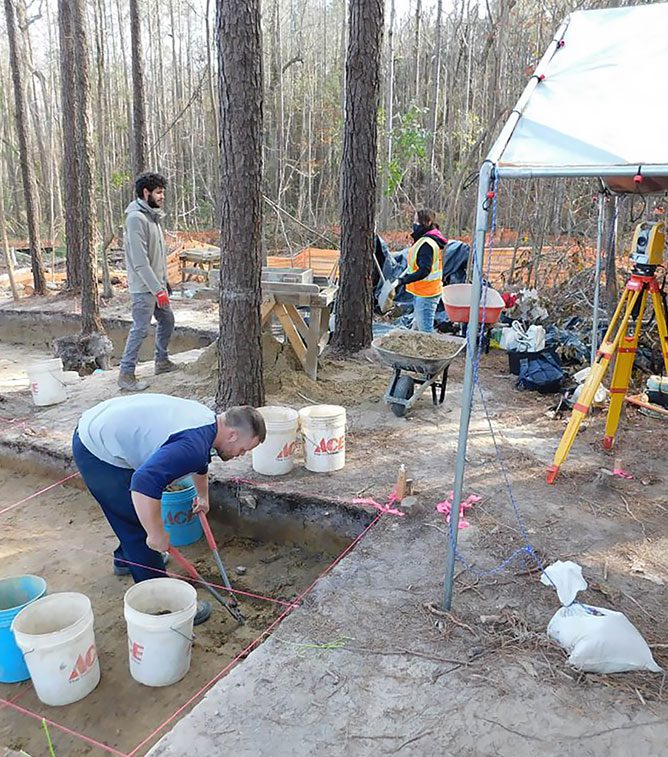
Historic Preservation Work Unearths African American Cemetery in Pensacola
Ethnographic Study of Berryessa Snow Mountain National Monument
Ask Chronicle Heritage
about the services we offer in your sector.