
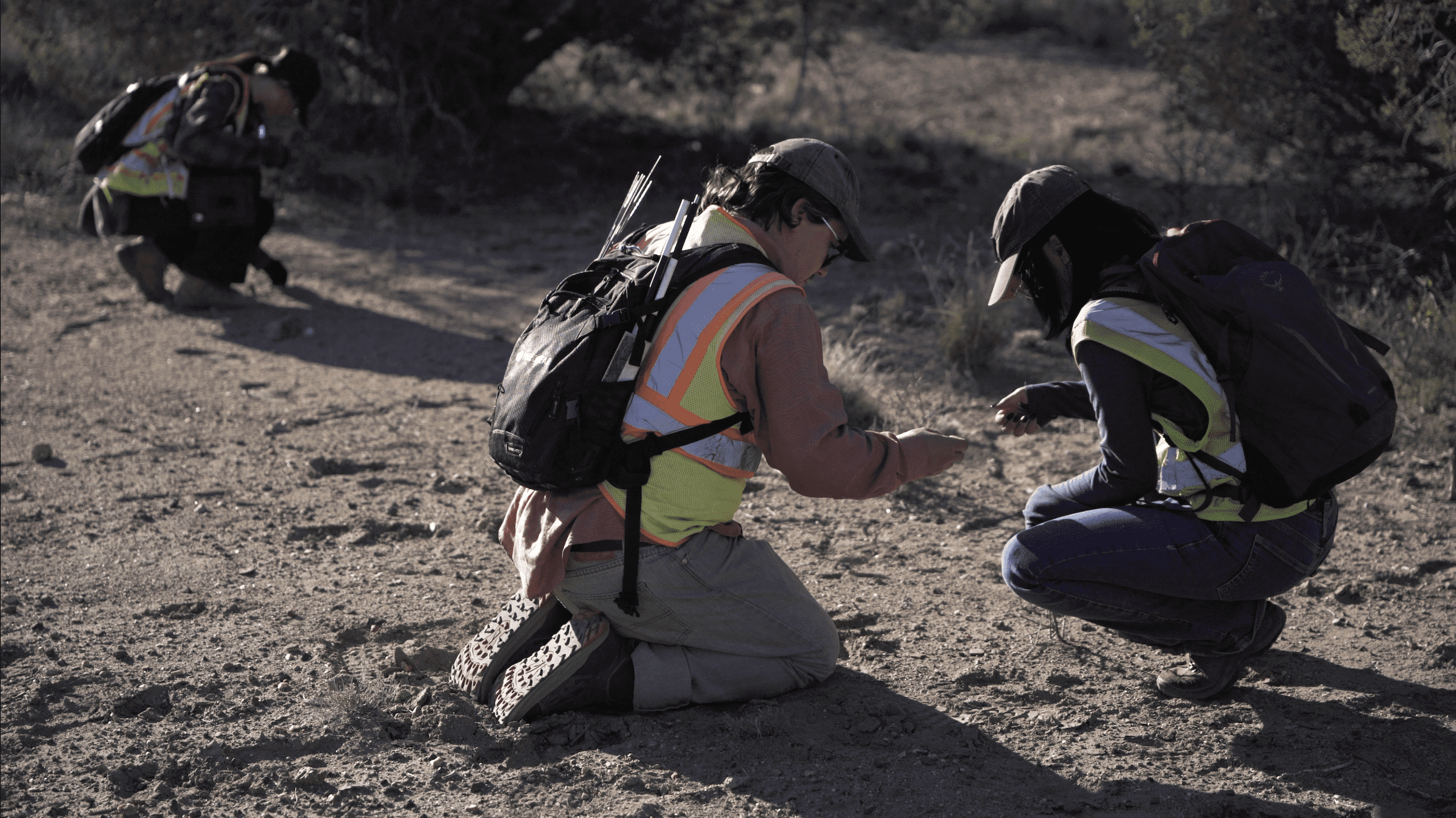
At Chronicle Heritage, the quality of our work starts with our people.
Across projects of all sizes and complexities, one pattern shows up consistently: When you have experienced teams who trust one another, take ownership of outcomes, and care deeply about the work, you get better results — more reliable data, smoother execution, and fewer surprises.
That’s not an abstract idea for us. It’s how we operate every day. It’s our mission.
What follows is a look inside Chronicle, through the voices of the people doing the work, and what that means for the clients and communities we serve.
Built on Expertise. Delivered Through Teams.
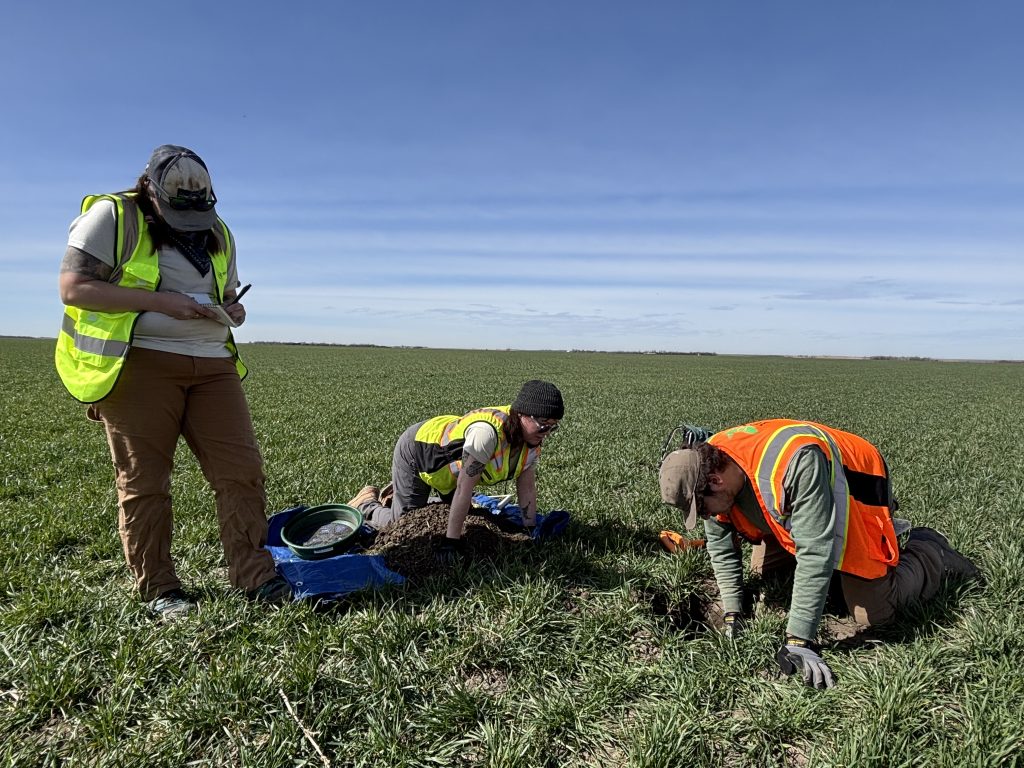
Chronicle brings together archaeologists, environmental scientists, lab managers, architectural historians, field directors, technologists, and support teams across a wide range of geographies and project types.
For Angela Huster, Southwest Regional Principal Investigator, that diversity is part of what makes the work both dynamic and effective.
“The diversity of projects I get to do… a new time-period, a new region, a new type of work. I never know what our next project coming in is going to be.”
That breadth translates directly into adaptability. Teams that are used to working across environments are better equipped to handle complexity, shifting requirements, and evolving project conditions.
For many, though, the defining factor is not just the work, it’s the people doing it together.
“The crew. I mean, we spend so much time with the crew that you get to know them as not just coworkers, but as friends,” said Kaylee Eubanks, Associate Archaeologist and Field Director.
“Getting to work with and meet fellow archaeologists – getting to see cool archaeological sites and artifacts,” added Sean Parsons, Staff Archaeologist.
The feedback we receive from our employees consistently reflects this: people value their teams.
In practice, that matters. Stable, collaborative teams bring continuity, stronger communication, and a shared understanding of how to execute well — reducing risk and improving consistency across projects.
A Mission Rooted in Responsibility and Defensible Work
Across every role and discipline, one theme stands out: responsibility.
Not just to the work, but to the cultural resources themselves and the communities connected to them.
“I feel like I have a commitment to the cultural materials to make sure that they end up where they’re supposed to be in a manner befitting their importance,” said Lex Haaland, Assistant Lab Manager.
“The only way to approach them is respectfully, being cognizant that we are stewards.”
That mindset is not just philosophical, it’s operational.
For clients, it translates to:
- Careful handling of materials that puts minds at ease
- Accurate documentation
- Work that stands up under regulatory and academic scrutiny
Chris Barton, Office Principal and Senior Archaeologist, frames it simply:
“Archaeology is a public service… to understand how we got here in the present.”
And as Mikala Hardie, Associate Archaeologist, points out:
“Archaeology is a destructive science… if we don’t get all the information… that information’s gone.”
This is why rigor matters. There are no second chances.
Chronicle’s approach is built around getting it right the first time, because the stakes require it.
Integrated Teams. Stronger Outcomes.
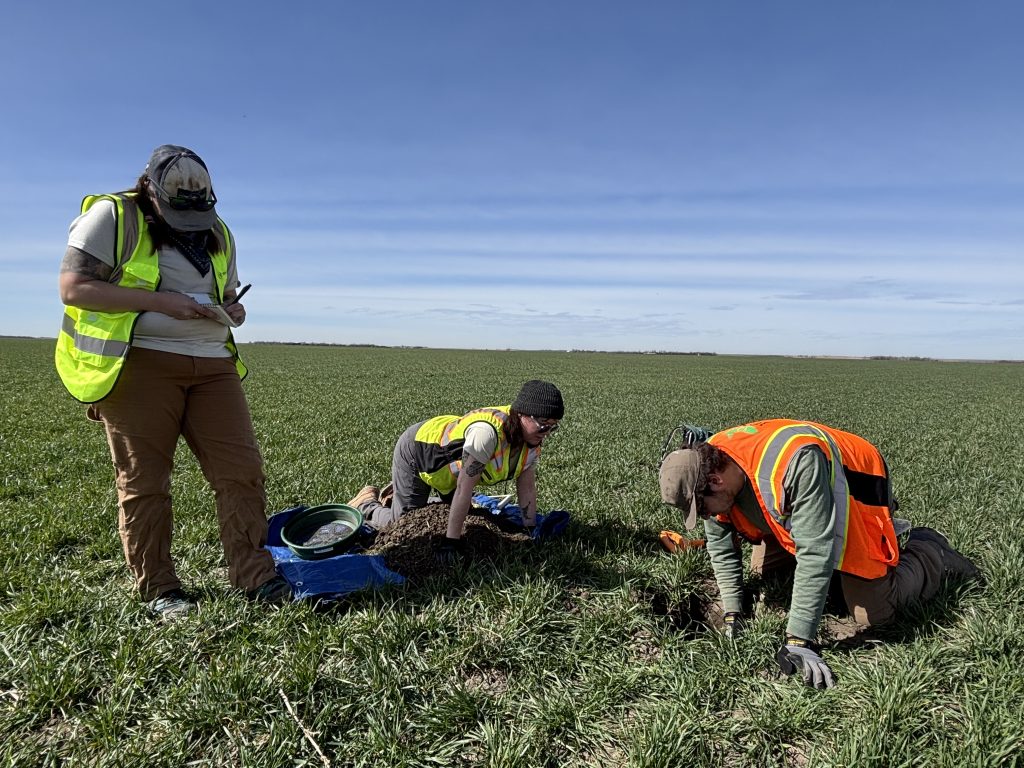
Heritage consulting is often misunderstood as a sequence of disconnected steps. In reality, fieldwork, lab work, reporting, compliance, and interpretation are deeply interdependent and the hand-offs matter greatly.
“I’m the regulatory and the archaeological reference for a project,” Angela explained, ensuring that data collection and interpretation align from start to finish.
Kaylee described the reality of field leadership:
“There’s a lot of prep before the project even starts,” followed by safety oversight, QA/QC, data management, and reporting.
In the lab, that continuity continues. If lab work is rushed, Lex noted, “it’ll stall out a project pretty significantly.”
Rhiannon Flaig added that lab work directly impacts “the quality of the report at the end.”
That integration is a core part of how Chronicle delivers, under the direction of Ashley D’Elia, our national Director of Lab and Curation Management. When these functions operate in silos, projects slow down and risk increases.
When they operate as connected teams, the result is:
- Better data integrity
- Faster turnaround
- More reliable reporting
Technology That Supports Better Decisions
Chronicle’s investment in exceptional and proprietary technology has been driven by an enduring commitment to helping experts do their work more effectively and efficiently.
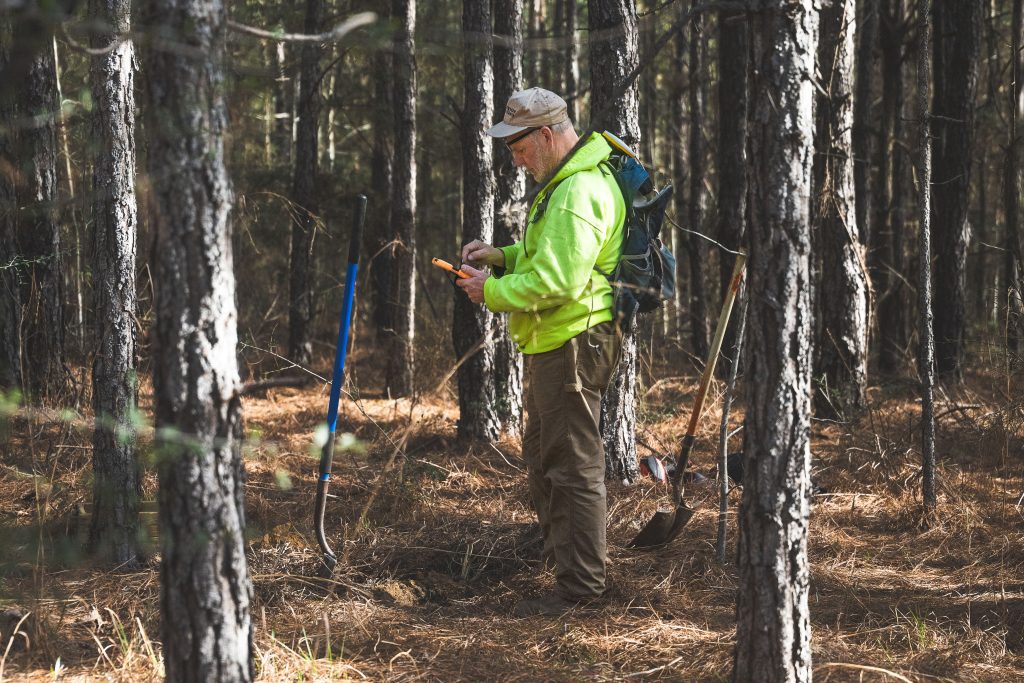
For Andrew Saatkamp, Associate Archaeologist and Field Director, tools like Codifi are changing how field data moves through a project.
“If you have drawn the shape of your site in Codifi, that automatically gets exported to your GIS.”
That integration reduces rework and eliminates common points of failure between field collection and final deliverables.
“It takes the data, it’s fast. The output is good.”
More importantly, it compresses timelines: “What used to take days now takes minutes… the shovel test inventory is within 30 seconds of being ready to go into a report.”
In an industry where delays and data gaps can create downstream risk, that speed and accuracy matter. When our staff is working on a connected site, quality checks can happen while the team is still mobilized.
Chronicle’s approach is not technology for its own sake, but technology that improves:
- Data quality and security
- Report quality
- Workflow efficiency
- Project delivery timelines
- Project budget management
Preserving What Would Otherwise Be Lost
At its core, Chronicle’s work is about protecting and interpreting stories that might otherwise remain hidden.
“There’s so many people’s histories that haven’t been told,” Chris said. “Our goal is to help tell those stories… so that we can learn from them.”
That work becomes especially meaningful in collaboration with descendant communities.
Reflecting on work at Timbuctoo, an Underground Railroad site, Chris described partnering with descendants “as equal partners in the past.”
Rhiannon spoke to that connection in more immediate terms:
“When you’re holding that object… I’m one of the first people to hold this in hundreds of years.”
Laura DeMatteo, Associate Architectural Historian, sees that same connection in the built environment:
“The built environment is one of the most immediate, tangible links that we have… without documentation, you lose the thread of history.”
For clients, this translates into work that is not only compliant, but meaningful, contextual, and responsibly executed.
A Culture That Supports Performance
Strong outcomes require strong teams and support systems that allow people to do their best work. The way Chronicle operates internally is directly reflected in the outcomes we deliver.
It means:
- Experienced, stable teams that know how to work together
- Strong coordination across field, lab, and reporting
- Technology-enabled workflows that reduce delays and rework
- A stewardship mindset that prioritizes accuracy and responsibility
- Work that stands up under scrutiny—regulatory, academic, and public
“Chronicle has given me quite a few opportunities,” Kaylee shared, including work across international and federal projects.
“Everyone is incredibly supportive,” said Victoria Shakespeare, Account Executive. “Answers any question you might have.”
Jim Delle, Regional Principal, emphasized: “The collaboration and collegiality that we develop as a team.”
And for Allison Cuneo, Director of Commercial Pursuits and Proposals:
“Providing my team the support they need to get their job done” is the priority.
That internal support structure enables:
- Faster problem-solving
- Better coordination
- Stronger execution under pressure
Which ultimately benefits our people, our clients, our partners, and the communities we work in.