
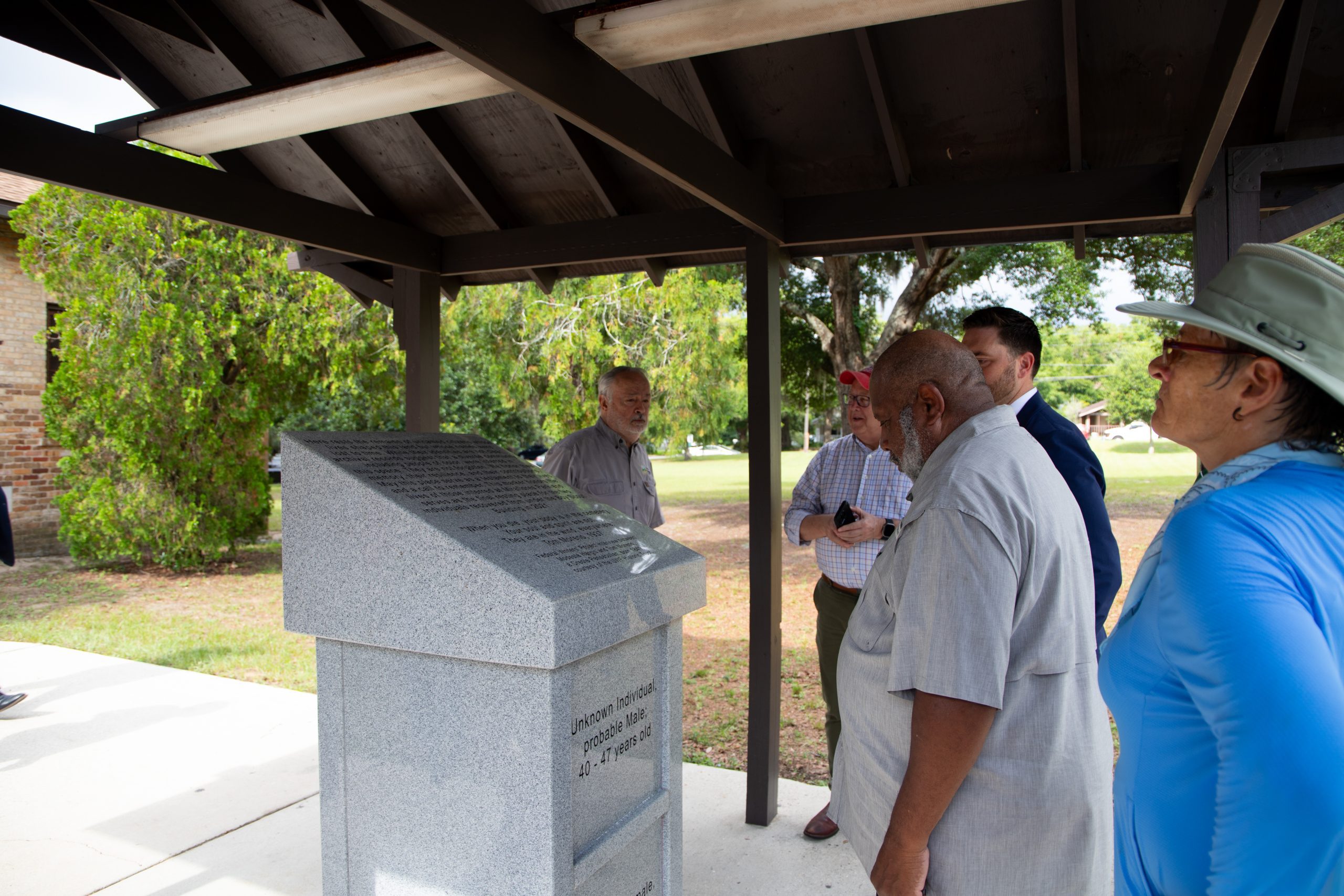
A simple, yet stately, square park lined with tall longleaf pine trees in Pensacola, Florida, revealed a forgotten history beneath its surface when the remains of two individuals were discovered in the crawl space of one of the park’s historic buildings in 2021.
Local authorities were initially called to Miraflores Park, but a field investigation revealed that the remains were older than 75 years, meaning they were not from a modern, forensic case, according to the City of Pensacola. This discovery spurred the city to reach out to local historians, and a community advisory group was formed.
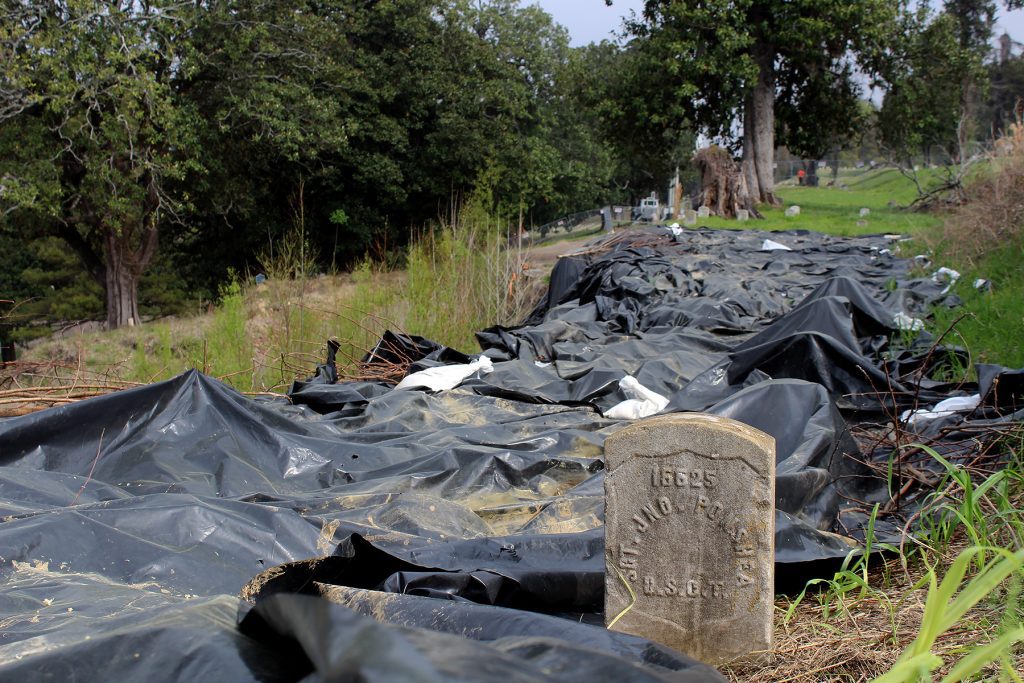
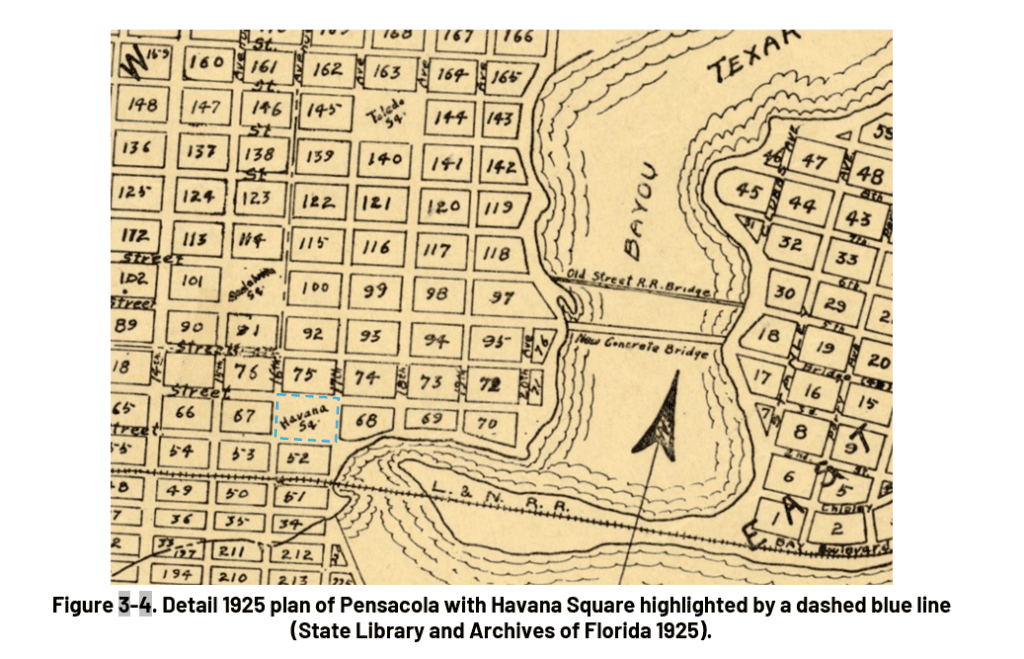
A review of historical documents, including newspaper articles, meeting minutes, legal records, and maps indicated that Havana Square, as the park was named until 1965, was used as an African American or Creole burial ground during the 19th century.
The city subsequently hired a firm to conduct both a historic human remains detection dog survey and a ground penetrating radar (GPR) survey, the results of which indicated 80 possible unmarked burials in the park.
With the help of experts and community members, the city had determined the cemetery’s history and boundaries and now desired to commemorate the people buried there.
A Plan for Forever
The city asked Chronicle Heritage’s Tallahassee office to provide a long-term preservation plan for the cemetery. The plan, authored by Emily Ford, Senior Architectural Historian and cemetery preservationist, provides context and documentation of the site, as well as plans for its future protection.
Applying years of experience with cemeteries, including those which are erased or neglected, Ford and her Built Environment team composed a review of other erased and neglected cemeteries, particularly those associated with African American communities as Havana Square Cemetery is. This background provided context for the cemetery and park. By weighing the approaches of others to acknowledging, preserving, and memorializing erased cemeteries, Ford and her team provided the city with a range of approaches that have been shown to be effective in the past.
Using the collected background information and documentation of the park itself, Ford assembled recommendations for the city to follow as it moves forward as steward of the park and cemetery. Ford’s recommendations included the completion of the GPR investigation, thorough mapping, standard operating procedures for incident response, and recommendations for disaster management and recovery.
The Miraflores Park Long Term Preservation Plan will be a guiding document as the city memorializes and preserves Havana Square Cemetery and the park in which it is situated. Responses to ground-disturbing events such as tree falls or natural disasters will be streamlined and effective, as will the management of the aboveground landscape including the Boy Scout Building, a National Register of Historic Places (NRHP)-listed building located within the park.
In the larger context, the plan will be one of a very few examples of a master plan for a cemetery that is not readily visible in the landscape.
“This document will hopefully provide support and guidance for the stewards of other erased cemeteries as they work to preserve them, as well,” said Ford. “We’re incredibly proud to have contributed to the preservation of Havana Square Cemetery.”
Commemorating the Cemetery
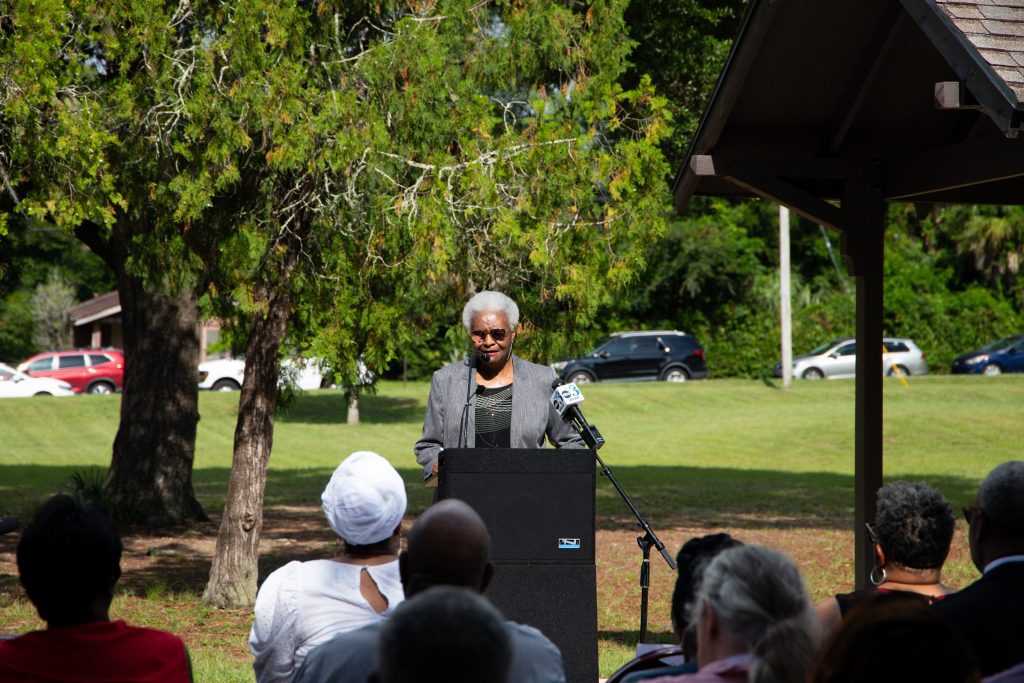
The city held a public ceremony on June 17 to unveil a burial marker and interpretive signage that pays homage to those buried beneath Miraflores Park.
The remains of the two individuals discovered in the crawl space of the Boy Scout Building were reinterred in the marker. A skeletal analysis conducted by University of West Florida biological anthropologists indicated that one individual is female and the other is likely male, according to the city.